
Sophie Carlier
General, maxillofacial and vestibular physiotherapy

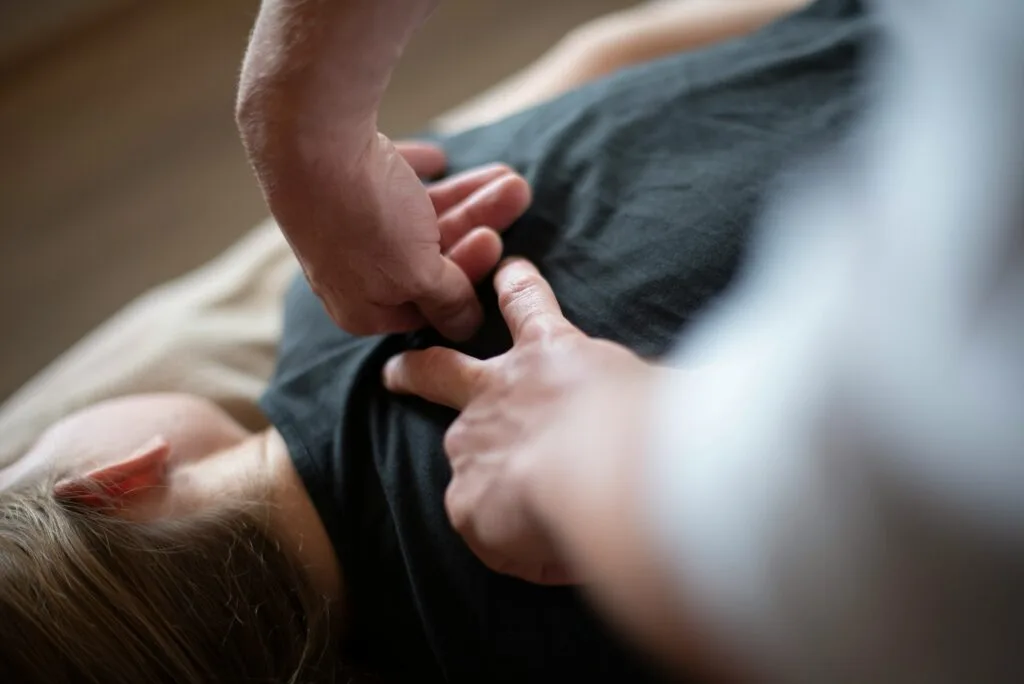
Jaw pain or difficulty opening your mouth: understand maxillofacial assessment, appointment preparation and the service at Rebalance.
Difficulty chewing, opening your mouth or moving your jaw should be clarified before deciding on care. Maxillofacial physiotherapy considers movement and muscles in this region. It may form part of a pathway discussed with your dentist or doctor.
Assessment explores difficult movements, pain and changes over time. It helps establish whether advice or movement work may be useful. Pain around the jaw is not itself a diagnosis. Dental pain or tooth wear needs dental assessment.
Note whether symptoms appear on waking, during meals or at another time. Mention any mouth guard, dental treatment, surgery or previous advice. Bring relevant documents. Avoid forcing a painful mouth opening to test your jaw.
Teeth clenching or grinding and jaw joint disorders are not identical. Our bruxism guide explains useful next steps. Any exercises should follow assessment and do not replace dental protection when indicated.
The profile below shows the centre’s currently documented maxillofacial focus. To explore all colleagues and their practical information, visit the Ixelles physiotherapy team. Explain your request before booking specialised care.

Depending on assessment, care may aim to make mouth opening more comfortable, reduce jaw and neck muscle tension, improve a movement or support a gradual return after surgery. Exercises and manual techniques are selected for your situation. Dental pain, infection or a sudden restriction should first be assessed by the relevant medical or dental professional.
The centre’s documented maxillofacial focus is provided by Sophie Carlier. Her profile gives more information about her background and appointment arrangements; it does not replace advice from your dentist or doctor.
Rather than repeatedly testing a painful opening, note when symptoms appear, whether you clench your teeth and how previous advice affected them. These observations help adjust care and coordinate it with the other professionals involved in your treatment.
Assessment may consider mouth opening and closing, the path of the jaw, neck movement and tension in the chewing muscles. Clenching habits, chewing, breathing and posture may also be discussed when they influence symptoms. An isolated, painless click does not necessarily mean that treatment is needed.
Care may be considered after some dental or maxillofacial procedures, in coordination with your dentist or surgeon. Instructions depend on the procedure: do not force mouth opening and ask when to resume normal eating, movement or exercises. Fever, suspected infection, marked swelling or worsening pain should be reported to the relevant professional.
NIDCR: temporomandibular disorders, for jaw symptom assessment and conservative approaches.
Updated .
Practical information