
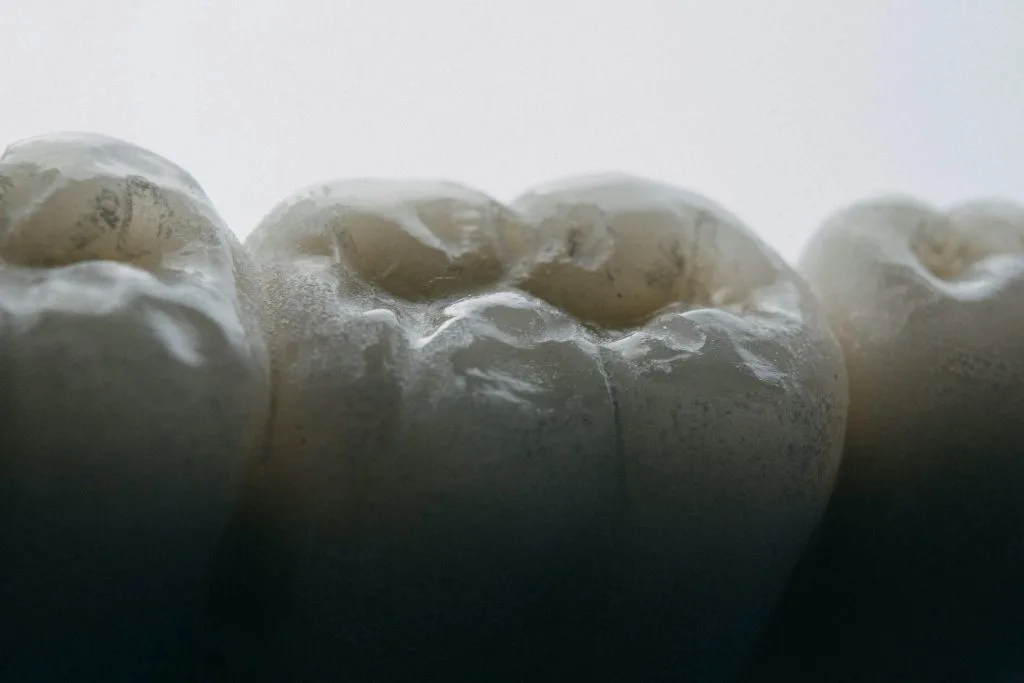
Bruxism: next steps and exercises to discuss
Clenching your teeth or waking with a tense jaw? Understand useful next steps, the limits of exercises and the roles of dental care and physiotherapy.
If you clench or grind your teeth, note when it happens and seek dental advice for pain, tooth wear or sensitivity. Jaw exercises do not replace this assessment and cannot guarantee protection for your teeth.
Bruxism and jaw pain are different
Bruxism means teeth clenching or grinding, during sleep or while awake. Jaw pain or difficulty opening the mouth can have several explanations and does not establish bruxism on its own. The NHS bruxism information describes symptoms and next steps.
Two gentle habits to consider
Notice daytime clenching. At familiar moments, such as working at a screen, check whether you are clenching. Release the tension without pushing the jaw. Record the circumstances for your appointment. Awareness of daytime clenching does not control sleep bruxism by itself.
Make room for relaxation. Calm breathing during a short break or a regular sleep routine may help when tension is part of the picture. Stress does not explain every case. These habits are not a cure and should not postpone dental advice.
Avoid repeatedly forcing your mouth open or stretching a painful jaw. If you already have prescribed exercises, ask how to adjust them before adding online routines.
When to see a dentist
Seek advice for sensitive or damaged teeth, persistent pain or grinding heard by someone while you sleep. A dentist can assess dental effects and discuss protection if appropriate. A mouth guard is not a universal answer to every jaw symptom.
Where physiotherapy may fit
If movement or jaw muscles are involved, assessment may be discussed with your care team. The NIDCR information on temporomandibular disorders explains assessment and conservative approaches. Exercises depend on the findings.
Note when symptoms began, difficult moments, recent dental care and previous advice. A jaw that remains locked, inability to eat or drink, or marked swelling with fever requires prompt medical or dental advice.
Understanding care at Rebalance
Read about maxillofacial physiotherapy, then meet the physiotherapy team. Confirm the specialised appointment arrangements before booking.
Updated .